Sam’s Club Pharmacy (Walmart Inc.)
Rx2Go Prescription Fulfillment Optimization
Improving efficiency in high-volume retail environments
Overview
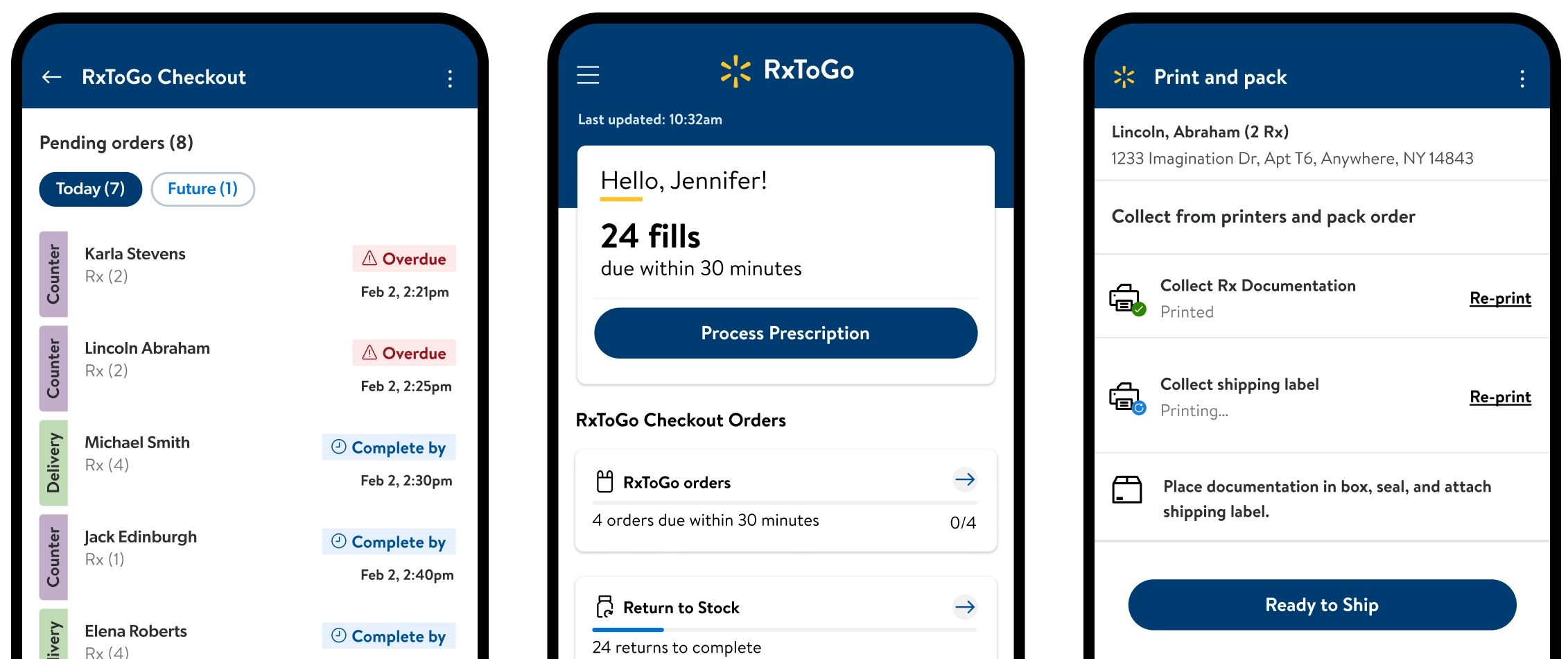
Redesigned the prescription fulfillment workflow within Rx2Go, Sam’s Club Pharmacy’s Android-based platform used by technicians to manage and fulfill high volumes of prescriptions across a nationwide network of retail locations.
The experience relied on multiple internal systems and operated under strict time and accuracy constraints, creating operational friction and increasing the risk of errors.
Focused on simplifying workflows, reducing system switching, and improving speed and reliability across in-store fulfillment.
The Problem
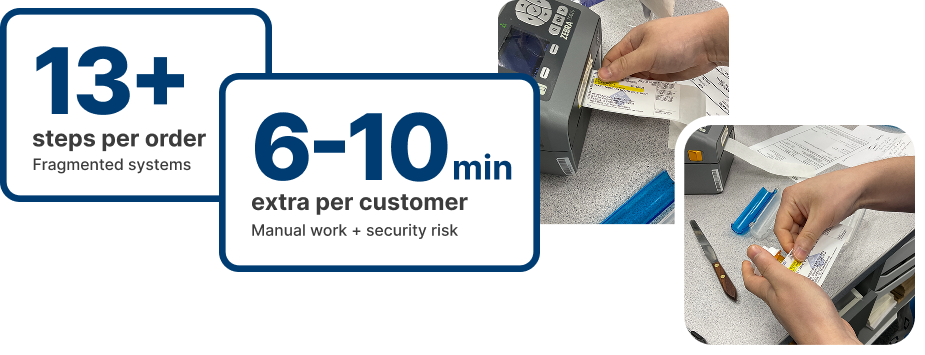
Pharmacy technicians using the Android-based Rx2Go fulfilled prescriptions through a 13+ step process across disconnected systems, adding 6–10 minutes per order and increasing error risk—including prescription mistakes and lost orders due to manual workflows.
Approach
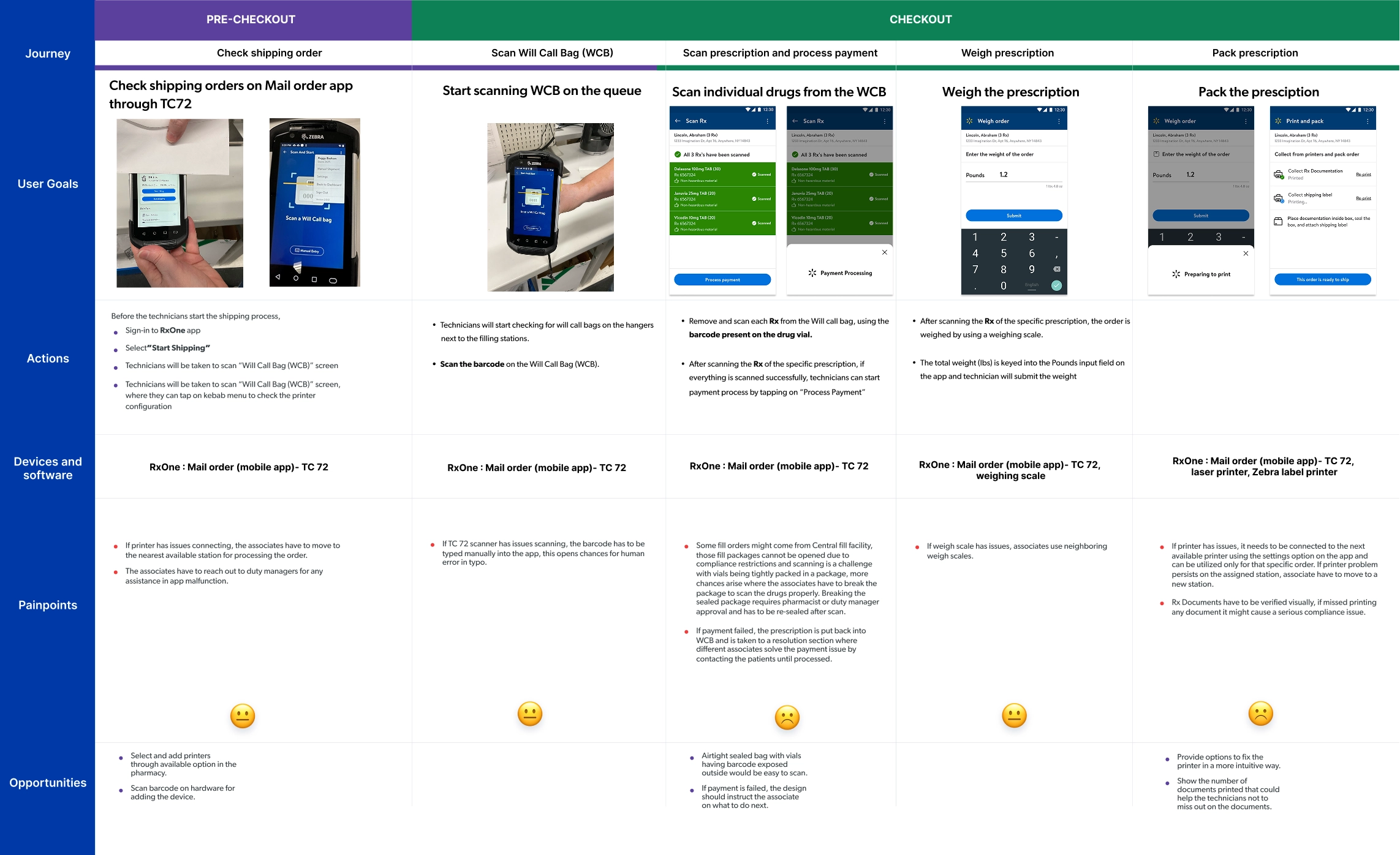
Mapped the end-to-end prescription fulfillment workflow to identify inefficiencies across systems, devices, and physical tasks.
- Conducted field studies to measure task time, steps, and technician movement
- Analyzed dependencies across GoLocal, POS, and internal tools
- Identified redundant steps, manual data entry, and device switching
- Aligned stakeholders on opportunities to simplify and unify the workflow
Synthesized findings into a prioritized workflow redesign strategy focused on reducing steps, minimizing system switching, and improving task sequencing
Solution & Design
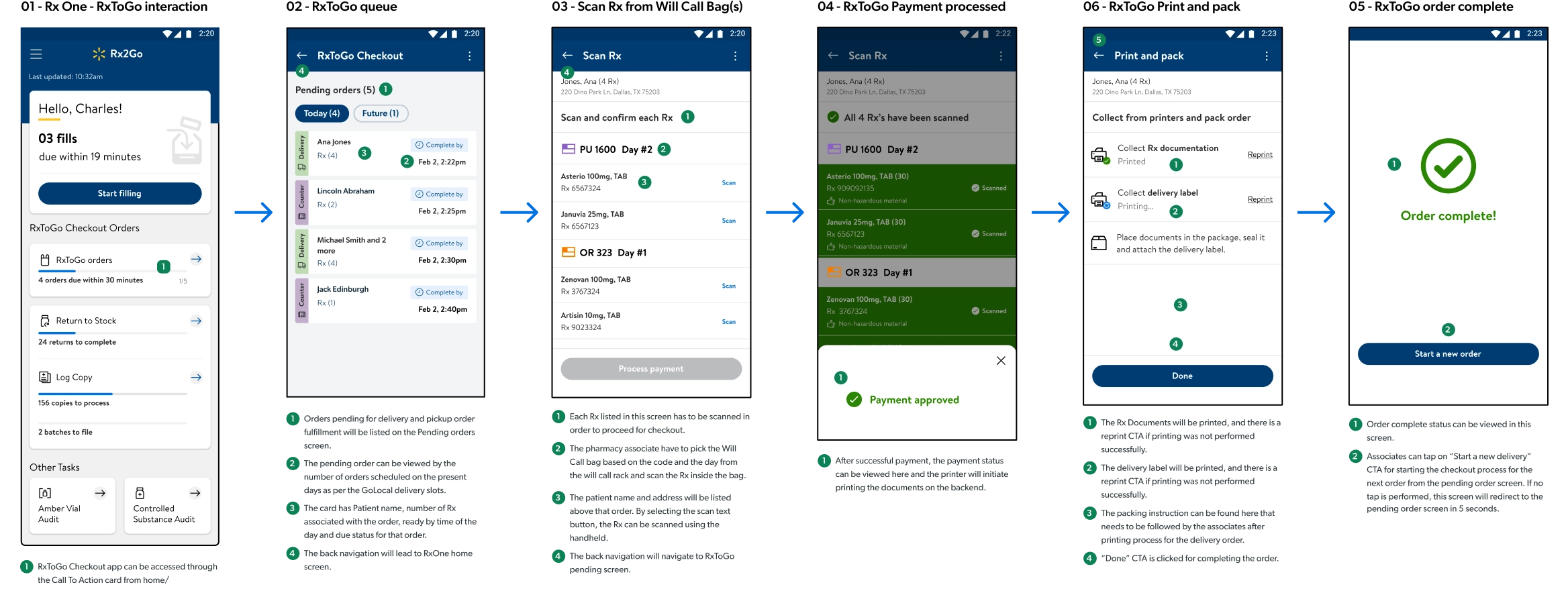
I redesigned the prescription fulfillment workflow within Rx2Go to reduce system fragmentation, eliminate redundant steps, and better align the experience with real-world technician behavior.
Interactive Prototype (Limited Preview)
A preview of the redesigned Rx2Go workflow, highlighting key interaction patterns and task sequencing improvements.
Full experience available during live walkthrough.
Outcome
The redesigned Rx2Go workflow simplified prescription fulfillment, improving speed, accuracy, and efficiency in high-volume environments.
- Reduced fulfillment steps from 13+ to a more streamlined workflow
- Decreased time per order by minimizing system switching
- Lowered error risk through improved task sequencing and validation patterns
- Improved technician efficiency and consistency during peak workloads
This work established a more scalable and consistent fulfillment model across retail pharmacy locations.